Precision Machining Components Manufacturer
Chenab Engineering Works machines high-tolerance components for OEMs across Pakistan, turning cast and steel blanks into finished, ready-to-fit parts through CNC milling, CNC turning, and precision finishing, all measured and certified in-house.
One partner, from raw casting to finished part.
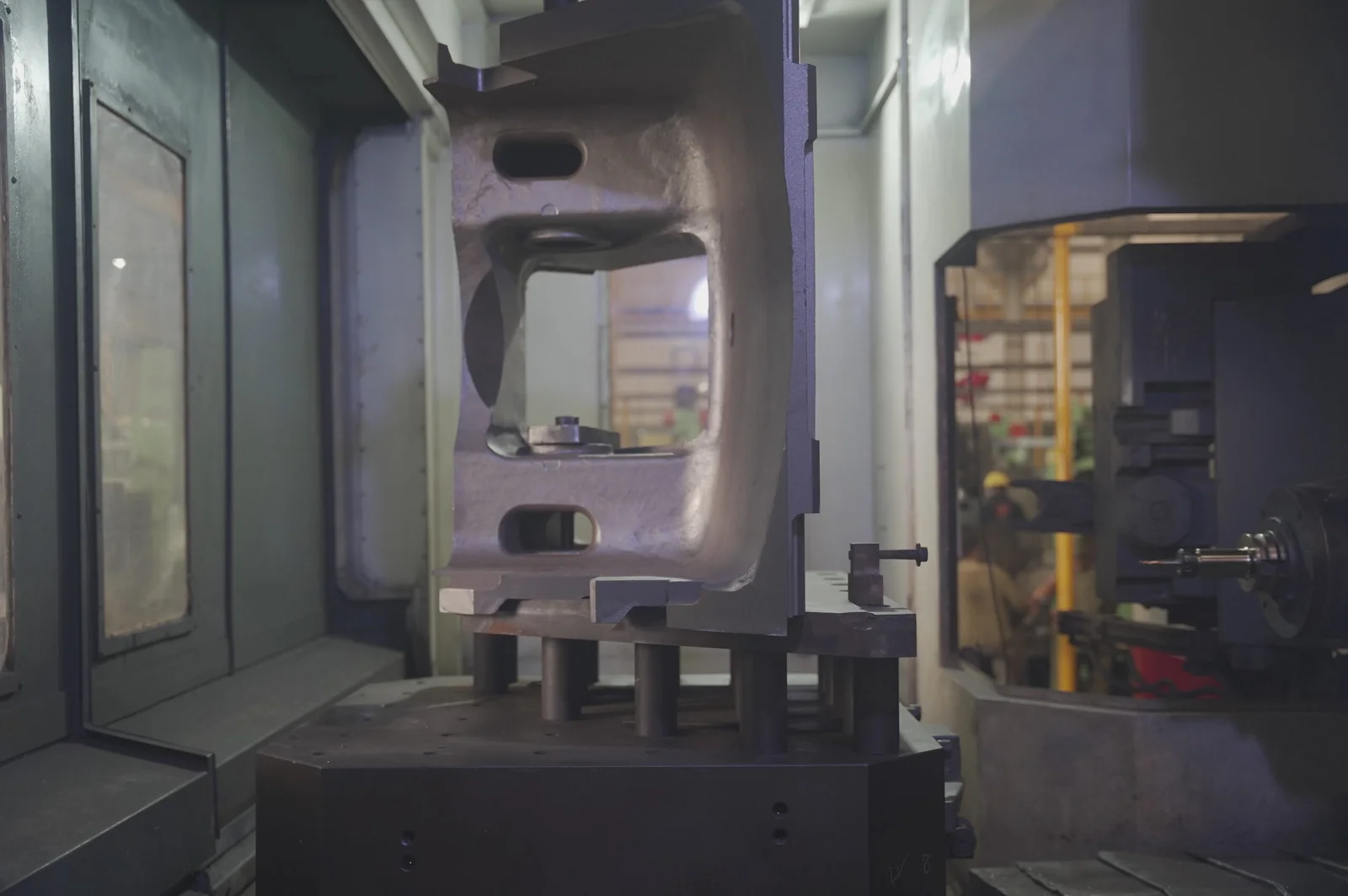
As a vertically integrated machining components manufacturer, Chenab Engineering Works machines the iron and steel castings we pour in-house, delivering finished components to drawing without the cost and delay of shuttling work between separate suppliers. Casting, machining, and inspection sit under one roof, so dimensional accountability never changes hands.
Our CNC milling, CNC turning, and precision finishing capabilities convert raw cast, forged, and bar blanks into machined parts that hold tight tolerances for the agricultural, automotive, defence, and heavy machinery sectors. From a single prototype to repeat production runs, every component is verified before it leaves the floor.
CNC machining capabilities under one roof
CNC Milling
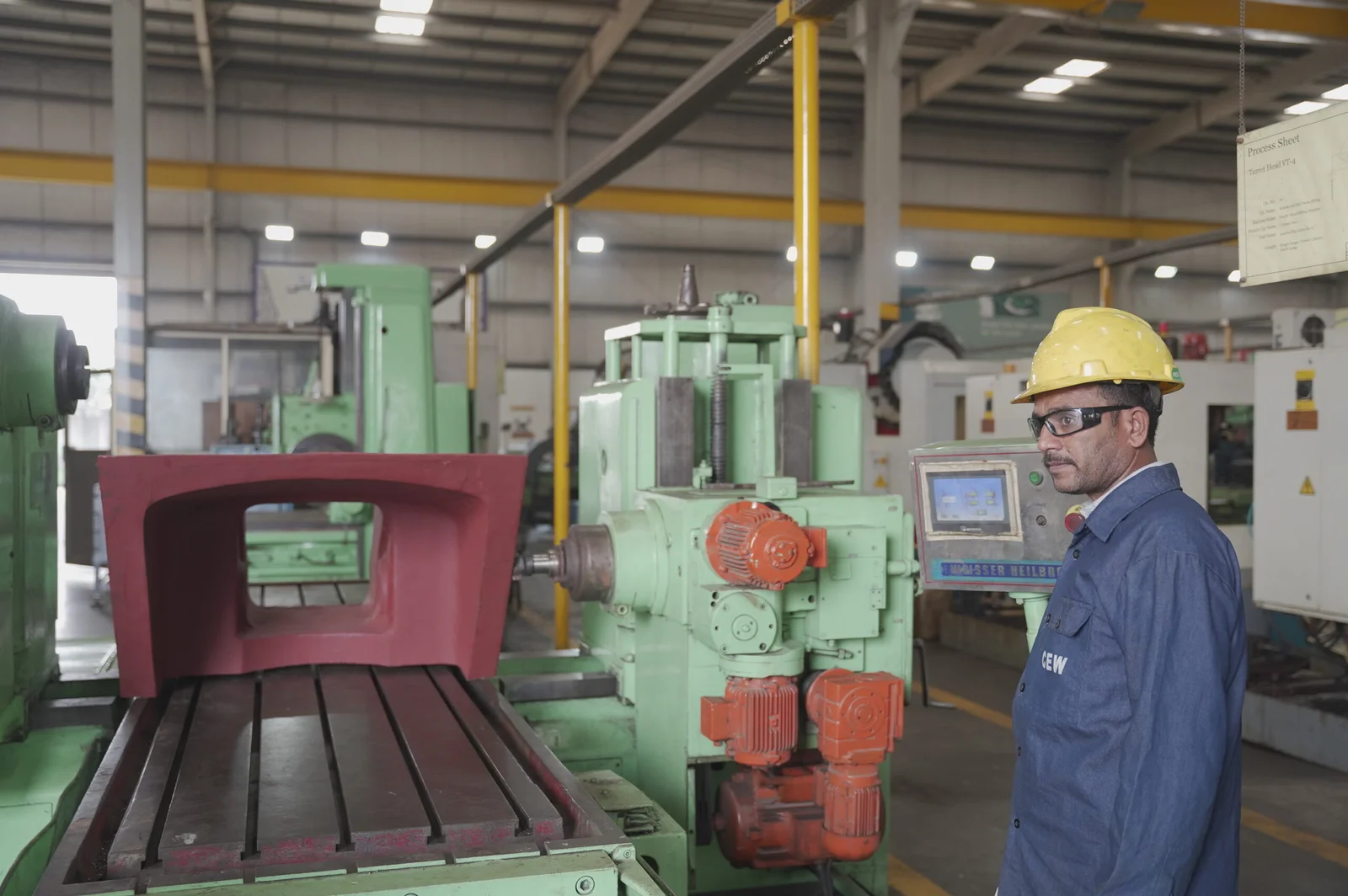
3 and 4 axis milling of complex prismatic parts, housings, brackets, and machined castings, with indexed and simultaneous operations for tight feature alignment in a single setup.
CNC Turning
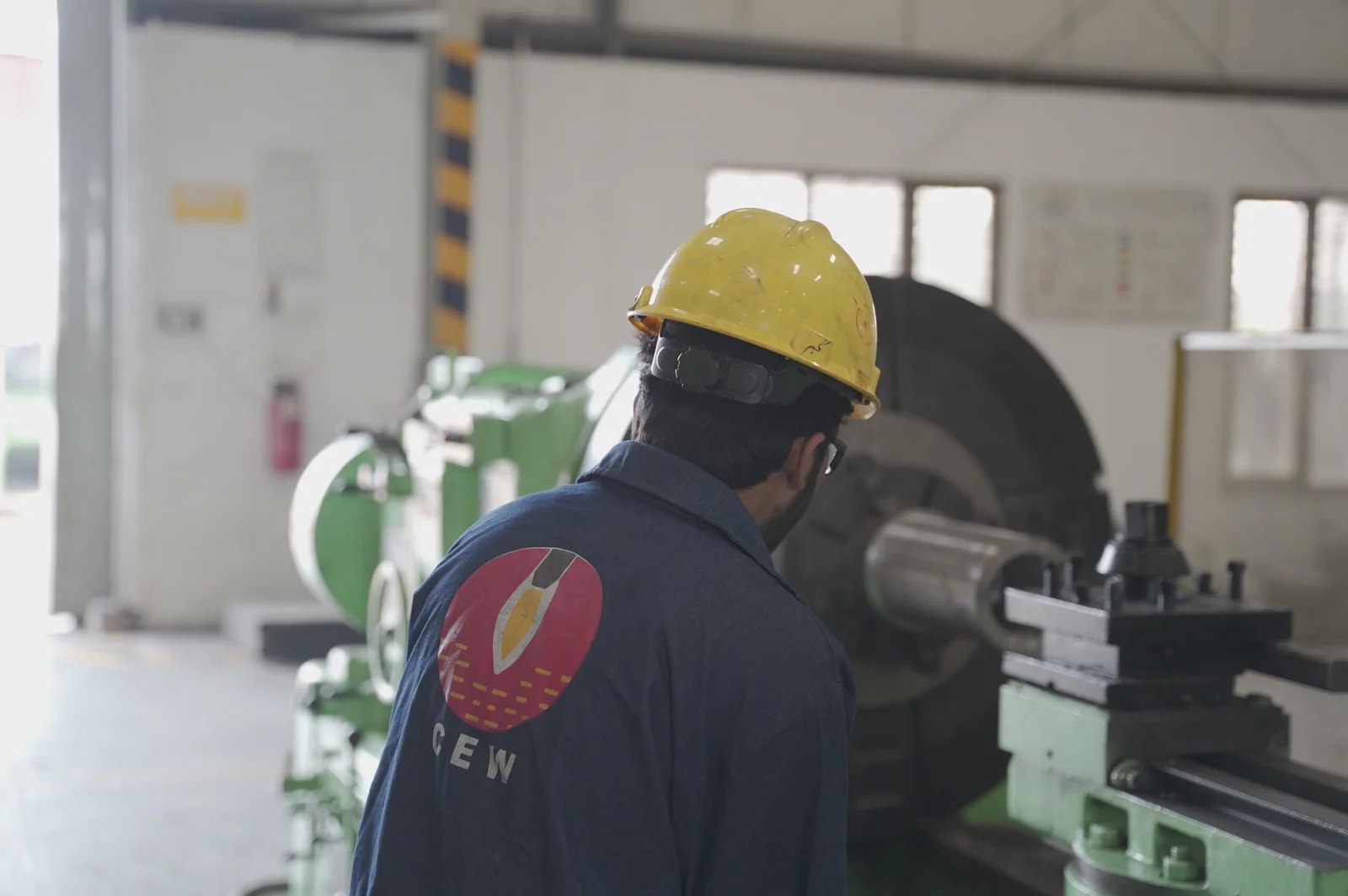
Turning of shafts, bushes, flanges, and rotational parts up to 600 mm diameter, holding concentricity and finish on bores, faces, and threads.
Grinding & Finishing
Grinding, lapping, and deburring for fine finishes and precise flatness on critical faces.
Drilling, Boring & Tapping
Accurate hole patterns, deep boring, and threaded features to gauge, ready for assembly.
Prototype to Production
First-article prototypes through to scheduled production batches, on the same machines and the same standards, so what you approve is what you receive at volume.
Contract & Production Machining
Ongoing contract machining for OEMs needing a reliable supplier of machined components, with capacity for repeat volume and consistent lead times.
The same part, the
first time and the thousandth.
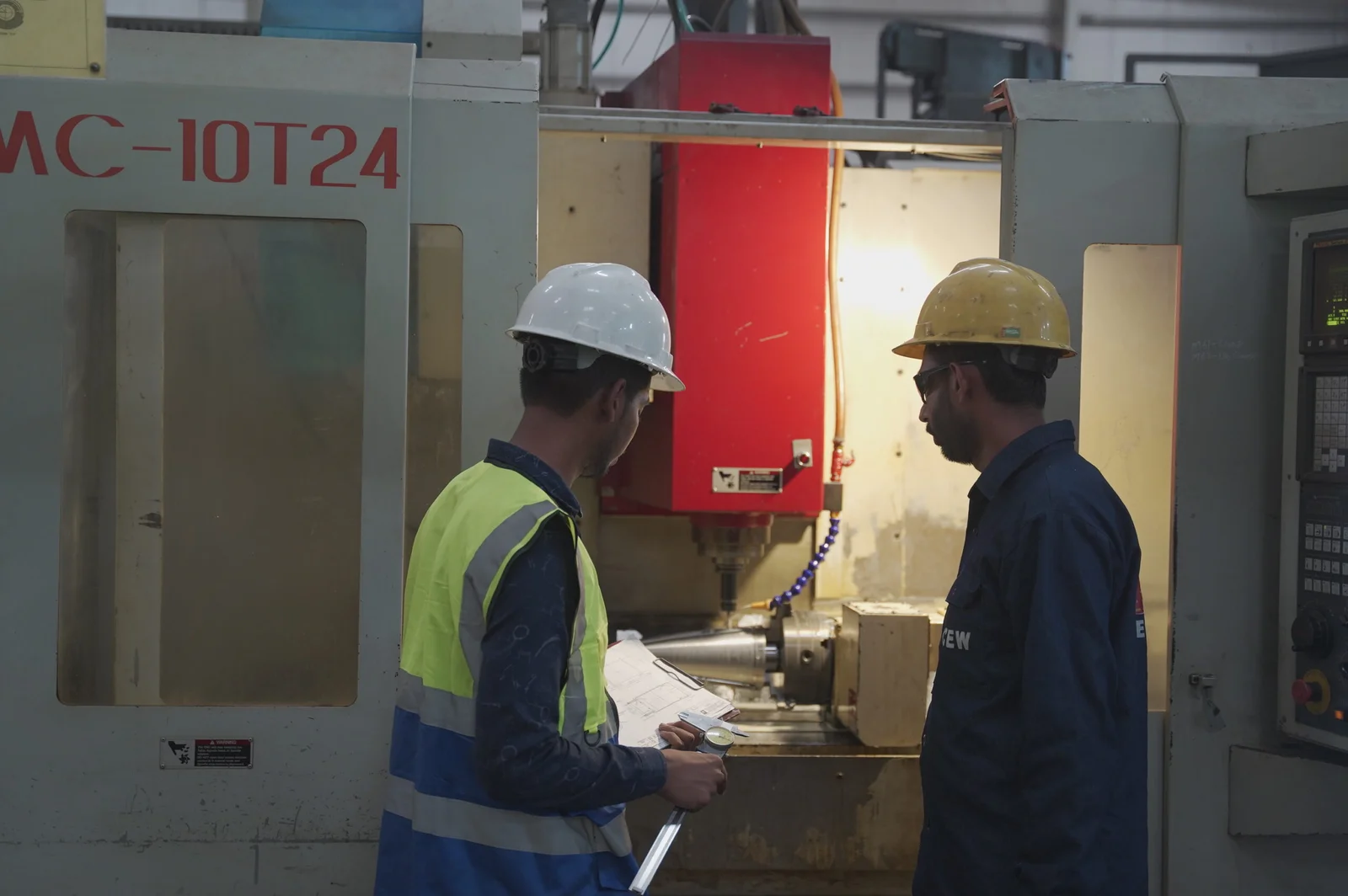
Precision you can measure
A machined component is only finished when it is proven. Every part is checked against its drawing using CMM and hand metrology, at first article and again in-process, so tolerances hold from the first piece to the last of the batch.
Because we cast and machine in the same facility, material traceability and dimensional records stay connected, and a full inspection report can be issued with your order.
- CMM dimensional verification against drawing
- First-article and in-process inspection
- Micrometer, bore gauge, and height-gauge metrology
- Material traceability from casting to finished part
- Inspection report supplied on request
Machining tolerances & specifications
| Parameter | Capability | Notes |
|---|---|---|
| General tolerance | ±0.05 mm | To ISO 2768-m as standard |
| Precision tolerance | ±0.01 mm | On critical features by drawing |
| Surface finish | Ra 0.8 to 3.2 µm | Operation dependent |
| Max turning diameter | 600 mm | Chuck and swing capacity |
| Max milling envelope | 1200 × 600 × 600 mm | Single setup |
| Machine axes | 3 and 4 axis | Indexed and simultaneous |
| Inspection | CMM | First-article and in-process |
Materials we machine
We machine our own cast iron and steel components, as well as customer-supplied blanks and bar stock, using controlled CNC turning, milling, boring, and precision finishing processes to achieve drawing-defined tolerances and production-ready results.
From drawing to despatch
DFM & Programming
Drawing review, design-for-manufacture checks, and CAM toolpath programming.
Workholding & Setup
Fixturing, datum alignment, and tool offsets set for repeatable accuracy.
CNC Machining
Milling, turning, drilling, and boring to the programmed geometry.
Finishing
Grinding, deburring, and surface preparation to the required finish.
CMM Inspection
Dimensional verification against drawing, with a report on request.
Despatch
Protective packing and on-time delivery to your line.
Components for industry that cannot stop
Agricultural Machinery
Tractor and implement components, gears, shafts, axle housings, and linkage parts.
Automotive
Machined shafts, brackets, and drivetrain parts to OEM specification.
Defence
Precision components for demanding, specification-controlled applications.
Pumps & Valves
Bodies, impellers, and sealing faces machined for flow-critical fits.
Heavy Machinery
Large machined castings and structural parts for earthmoving and plant.
Energy & Infrastructure
Durable machined parts for power, water, and process installations.
Tractor Parts Catalogue
Precision-engineered cast iron and machined tractor components for Massey Ferguson, Fiat, and New Holland models. All parts machined and inspected to exacting quality standards.
Machining components manufacturer FAQs
Q1What does a machining components manufacturer do?
Q2What tolerances can you hold?
Q3Do you machine your own castings?
Q4What is the minimum order quantity?
Q5Which materials can you machine?
Q6Do you provide inspection reports?
Q7Where are you located and do you export?
Send us your drawing.
Get a quotation from a machining components manufacturer that casts, machines, and inspects under one roof. Share your part drawing, material, and quantities, and our engineers will respond with tolerances, lead time, and pricing.
Get a Free Quote