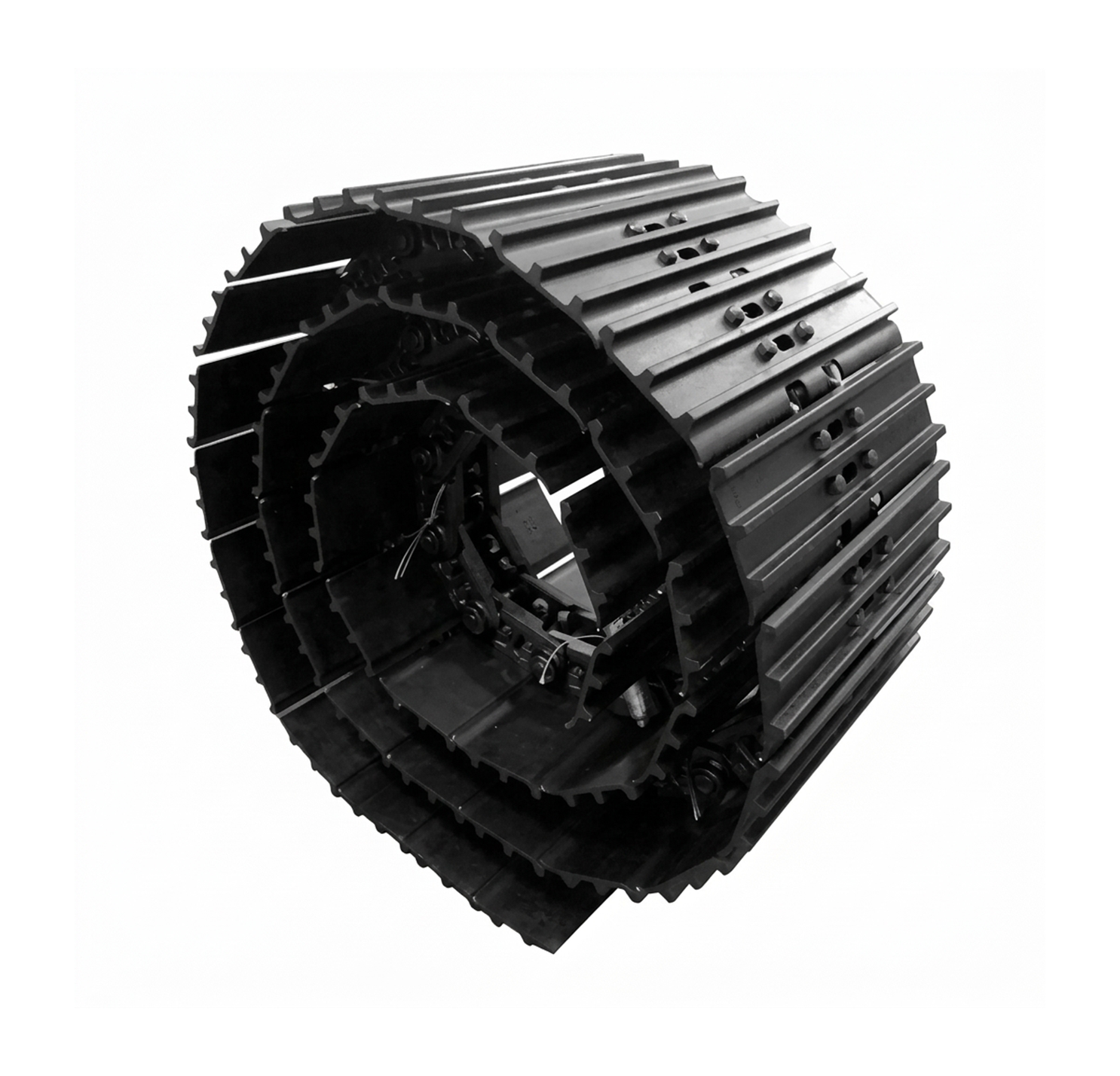
A rubber track assembly can be used with excavators and compact equipment. A track assembly will work in conjunction with other parts such as sprockets, rollers and idlers in the undercarriage.
When choosing the correct track to suit your machine you need to ensure it is compatible with your machine. The track size, tread and conditions are also key factors to consider.
Chenab Engineering Works have a Rolled Rubber Track Assembly for excavators and compact equipment in their Bulldozer & Excavator Parts section.
How Rubber Tracks Support Machine Movement
Rubber tracks have a continuous surface area to allow better weight distribution and help move your machine around construction sites, landscaping areas and other environments.
Unlike steel tracks they have a rubber outer structure. This makes them suitable for certain designs of equipment and operating conditions.
The track must fit correctly with the undercarriage components. If the wrong track is chosen it can cause misalignment issues.
Key Parts and Features of a Rubber Track
A rubber track includes several structural elements that contribute to its operation.
- Rubber body: Forms the outer structure that contacts the ground.
- Internal reinforcement: Supports the track structure and helps it maintain its shape.
- Tread pattern: Provides contact with the working surface and influences traction.
- Drive lugs: Engage with the machine's drive system to support track movement.
- Guides: Help keep the track aligned with the undercarriage.
The exact construction can vary between products. Buyers should confirm the design and specifications of the required replacement rather than assume all tracks use the same arrangement.
Where Excavator and Compact Equipment Tracks Are Used
Rubber tracks are commonly used on compact excavators and other tracked equipment where their design suits the working environment.
They can be relevant to:
- Construction work: Supporting movement around building and excavation sites.
- Landscaping: Helping compact equipment travel across garden and outdoor work areas.
- Ground preparation: Supporting machines used for site preparation and related tasks.
- Compact equipment applications: Providing a track option for machinery designed around rubber undercarriages.
The correct selection depends on the machine manufacturer's requirements and the surface conditions.
What to Check Before Selecting a Replacement
Track dimensions and machine compatibility are important when sourcing a replacement. A track that looks similar to the existing one may still have a different fit or construction.
Before ordering, check:
- Machine brand and model: Identify the exact equipment.
- Track width: Confirm the required width from machine documentation.
- Pitch: Check the distance between corresponding drive points.
- How long is the track?
- What type of tread does it have compared to the current product?
- If known please provide the part number.
Images, drawings and dimensions can also be useful for the supplier to know what you need.
Signs That a Rubber Track May Need Replacement
These signs do not always mean the track is the only source of the problem. Sprockets, rollers, idlers, and track tension should also be checked.
- Indicators That Your Track May Require Replacing
- Check the track regularly to spot any damage early. Common indicators are:
- Visible cracks and tears.
- Missing sections of tread.
- Visible reinforcement/ steel.
- Uneven wear.
- Frequent problems with the track. This could indicate you need to check the under carriage of the rubber track.
There may be other causes for these indicators so you should also check the sprockets, rollers, idlers and track tension.
Understanding Chenab Engineering's Rolled Rubber Track Assembly
Chenab Engineering Works lists a Rolled Rubber Track Assembly for excavators and compact equipment. The product appears under its Bulldozer & Excavator Parts category, with Excavator and Track listed as its features.
The company has a wide range of engineering and manufacturing capabilities including CAD/CAM Engineering, Foundry Services, CNC Machining, Material Specification and Quality Assurance.
This is a general capability of the company and does not confirm the process used to manufacture this rubber item. The details of the width, pitch, length, tread, rubber type and machine models compatible with this track are not shown publicly. We recommend confirming these details with Chenab Engineering.
Information to Prepare Before Contacting a Supplier
A well-prepared enquiry makes product identification easier. If you are looking for a rolled rubber track excavator replacement, share the following information where available:
- Equipment brand and model.
- Existing track part number.
- Track width, pitch, and length.
- Tread pattern or clear photographs.
- Required quantity.
- Technical Drawings or references
To help our supplier know what they are making the product for and what specifications need to be confirmed.
Talk to Chenab Engineering about your rubber track requirements.
To ensure the correct replacement part is chosen, accurate details of your machine and confirmed product specifications are required.
Chenab Engineering Works have a Rolled Rubber Track Assembly for excavators and compact equipment. Give us details about your equipment, what we can measure, pictures and how many you need. We can then talk through your requirements.
Visit the Chenab Engineering contact page to make an inquiry.