
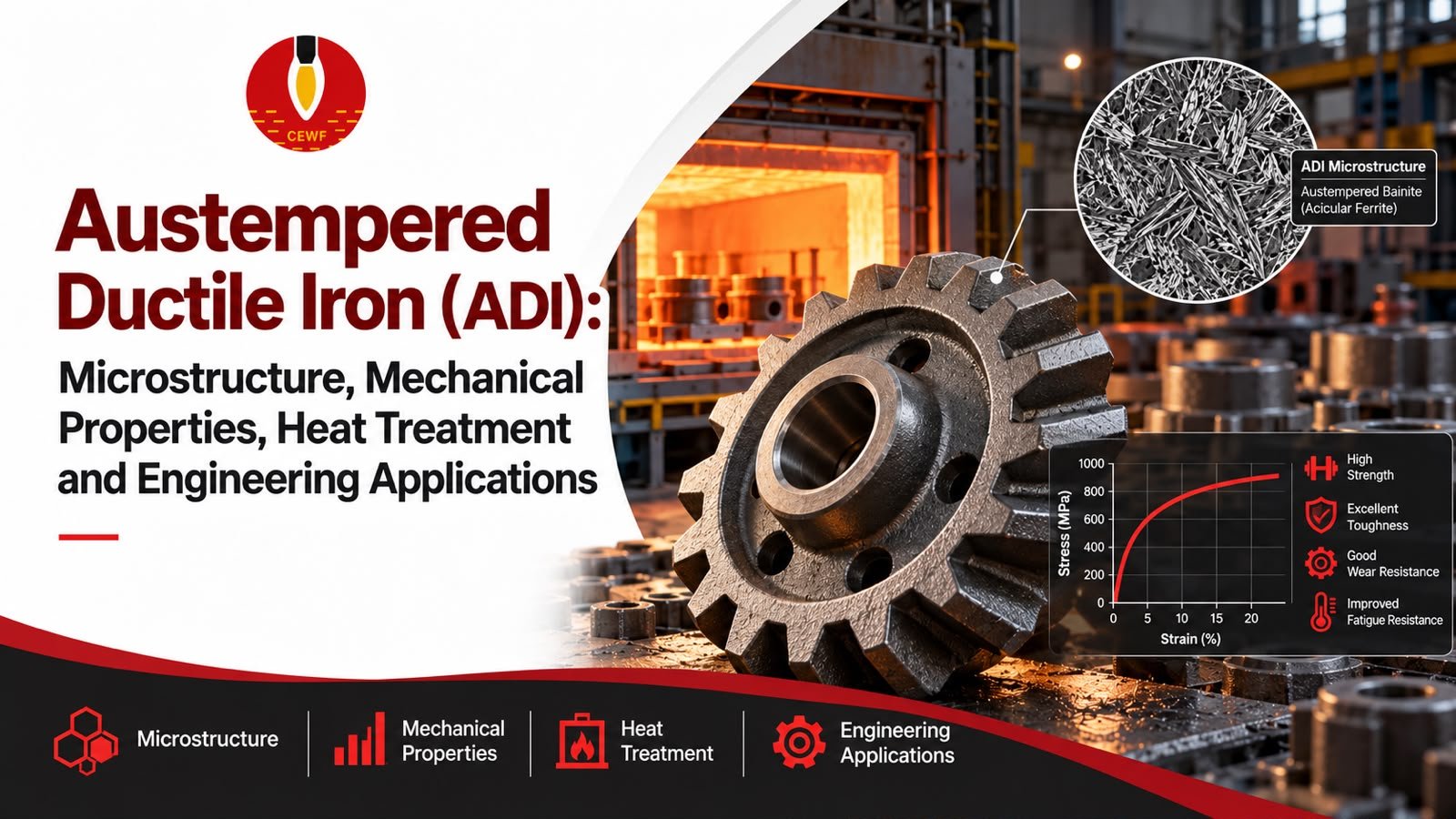
Modern components require incredibly strong but lightweight materials. Austempered Ductile Iron can help with this problem and is used by engineers today. They have many desired properties that make them ideal for replacing heavy forged steels.
The unique ausferrite microstructure delivers outstanding toughness while maintaining excellent overall value for large production runs. These features help explain key austempered ductile iron properties. The ADI heat treatment process improves the strength and performance of the material.
Austempered Ductile Iron as an Engineering Material
Knowing about the properties of Austempered Ductile Iron is key to designing a suitable component. To produce high-quality austempered ductile iron castings and other ADI castings, there must be close control of heat and chemistry. This is an incredible advancement in modern Metallurgical Engineering.
Design Engineers will always specify this material for demanding components where reliability is a key factor. The finished product is a very cost-effective alternative to forged steels.
The Metallurgical Principles Behind ADI Performance
Ausferrite develops inside the material during the ADI heat treatment process. It contains thin ferrite and carbon-rich austenite. This structure gives ADI its strength and other important properties.
The Role of Ausferrite in ADI
The ADI microstructure determines many ductile iron mechanical properties and depends on the structure developed during heat treatment. This structure allows ADI to carry heavy loads while remaining strong, tough, and resistant to cracking.
Graphite Nodularity and the Ductile Iron Matrix
Unlike flake graphite, its rounded shape helps stop cracks from spreading and makes the material less likely to break. This structure also supports component strength and reliability under demanding operating conditions.
How Microstructure Influences Strength and Toughness
The fine acicular structure restricts the movement of dislocations within the metal, improving its strength and durability. This microstructural change gives ADI better mechanical properties than conventional ductile iron.
ADI Heat Treatment: From Casting to Austempered Microstructure
The process depends on carefully controlled temperatures in specialised molten salt baths. Heat treatment of austempered ductile iron (ADI) involves two main stages, each essential for achieving the desired material properties.
Austenitizing: Temperature and Process Control
The castings are heated to temperatures ranging from approximately 1,550 to 1,700°F. This allows the carbon to fully dissolve within the iron matrix. This produces a fine-grained austenite microstructure which can be rapidly quenched.
Austempering: Time, Temperature and Transformation
The components are quickly transferred into a molten salt bath maintained at a controlled temperature. This stage limits the development of unwanted pearlite and brittle martensite.
Process Variables That Affect Final Material Properties
Time and temperature are both important factors in obtaining the correct mechanical properties. Increasing the time at high temperature will improve ductility but reduce hardness. Materials treated at lower temperatures generally achieve higher strength and improved resistance to wear.
Mechanical Properties of Austempered Ductile Iron
This material offers a good balance of strength and ductility. The available austempered ductile iron grades are classified under ASTM standards according to their mechanical properties.
Tensile Strength and Yield Strength
The first ADI grade has a minimum tensile strength of 850 MPa and a minimum yield strength of 550 MPa. These values help define its ADI tensile strength. Advanced grades can achieve tensile strength values of up to 1,600 MPa, depending on the material specification and heat treatment.
Hardness, Wear Resistance and Fatigue Performance
Higher ADI grades offer notable ADI hardness and wear resistance. Grade four achieves a Brinell hardness between 388 and 477 BHN reliably. Additionally, the overall ADI fatigue strength is typically fifty percent higher than standard.
Ductility, Impact Resistance and Toughness
Lower ADI grades can stretch by more than 10% before breaking. The unnotched impact energy remains high, ensuring reliable performance under stress. This toughness persists even in sub-zero operating environments.
ADI vs Conventional Ductile Iron and Steel
Material selection involves evaluating this alloy alongside conventional manufacturing options, including a comparison of ductile iron vs austempered ductile iron. The final decision depends on the component’s load capacity, wear resistance, and production costs.
ADI vs As-Cast Ductile Iron
Ductile iron and ADI differ in their structure and strength. Unlike conventional ductile iron, ADI develops an ausferritic microstructure through controlled heat treatment, which improves its strength and wear resistance. This specialised heat treatment can substantially increase tensile and yield strength, with improvements depending on the grade and processing conditions.
ADI vs Heat-Treated Steel
Compared to conventional steels, it offers a weight saving of approximately 9%. Graphite nodules also help ductile iron reduce vibrations and make machining easier than with many types of steel.
Choosing Materials by Load, Wear, and Cost
These specific ADI material properties make it ideal for dynamic loading, including applications where ADI fatigue strength is important. ADI often provides a fifteen to twenty percent cost saving overall. It replaces expensive steel forgings in many heavy-duty applications successfully.
Property As-Cast Ductile Iron Heat-Treated Steel ADI (Grade 2) Tensile Strength ~400 MPa 800-1200 MPa 1050 MPa Density 7.1 g/cm³ 7.8 g/cm³ 7.1 g/cm³ Wear Resistance Moderate High Very High Machinability Good Poor ExcellentIndustrial Applications of ADI Castings
Austempered ductile iron applications cover a wide range of industries because ADI castings offer strength and durability. Each design needs proper testing to confirm it can handle difficult working conditions.
Agricultural Machinery and Tractor Components
Agricultural machinery faces constant abrasion from soil and debris. Components such as digger teeth and tillage tools benefit from ADI’s wear resistance. Its ability to harden at the surface during use can help extend component life.
Automotive and Power Transmission Components
Common parts made from this material include gears, crankshafts, and axles. Its properties support smoother operation, lower component weight, and improved resistance to fatigue.
Heavy-Duty and General Engineering Applications
Its toughness and wear resistance make ADI suitable for selected heavy-duty engineering applications, including military projectiles and construction track shoes. These components can experience repeated impact, abrasive wear, and demanding operating conditions. Engineers consider the load, shape, and operating conditions before choosing a material.
Manufacturing and Quality Considerations for ADI Components
Reliable components depend on controlled austempered ductile iron manufacturing conditions, particularly when producing austempered ductile iron components. Quality checks throughout the production process help maintain consistency and ensure the finished parts meet the required specifications.
Casting Quality and Chemical Composition
The base iron must have high spheroidal graphite nodularity consistently. Trace elements must be controlled to prevent brittle phase formation.
Heat Treatment Uniformity and Dimensional Stability
Salt bath quenching will ensure even cooling of complicated geometries. This will also reduce warping and allow good tolerance control. Temperature control will be consistent; therefore, mechanical properties will be reproducible.
Machining, Inspection and Material Verification
Machining is best performed before the final thermal processing stage. Non-destructive testing verifies the internal soundness of the finished castings. Tensile testing of keel blocks confirms the achieved material grade.
Design Considerations When Specifying ADI for a Component
Proper material selection begins with a thorough analysis of service conditions. Engineers must evaluate all environmental and mechanical factors carefully.
Selecting the Appropriate ADI Grade
Engineers need to specify the correct grade based on the likely failure mode. In high-stress applications, a higher grade is required to achieve higher tensile strength. If impact resistance is required, then a lower, more ductile grade will be needed.
Operating Loads, Wear Conditions and Service Life
Surface hardness should be specified to meet the likely abrasive wear. Fatigue should be carefully considered if there are dynamic loading conditions. Safety factors will depend on the expected service life.
When ADI Is Not the Right Material Choice
ADI may not be suitable in very high temperature environments. Applications that require a large amount of welding would be better served using standard steel. In highly corrosive environments, specialised stainless alloys may be required.
Frequently Asked Questions About Austempered Ductile Iron
How Does ADI Differ from Conventional Ductile Iron?
Conventional iron has a ferritic or pearlitic matrix structure naturally. ADI undergoes thermal processing to create a superior ausferritic matrix. This results in significantly higher strength and wear resistance.
Does Austempering Increase the Strength of Ductile Iron?
Yes, the process at least doubles the overall tensile strength. It simultaneously maintains or improves the material's impact toughness.
Is ADI Suitable for Wear-Loaded Components?
It is highly suitable for severe wear applications consistently. The material work-hardens under stress to resist abrasion effectively. This makes it ideal for ground-engaging tools.
What Factors Determine the Appropriate ADI Grade?
The required balance of strength, ductility, and hardness dictates the grade. Section thickness and cooling rates during processing also influence the choice.
Conclusion: Selecting ADI for Performance-Critical Engineering Components
This advanced material offers a compelling alternative to traditional forged metals for modern engineering. It successfully combines excellent castability of iron with remarkable strength typically found in steel. Design engineers can achieve significant weight savings while reducing overall manufacturing costs substantially. The unique ausferritic microstructure provides outstanding performance in the most demanding industrial applications today.
Proper material specification ensures reliable performance throughout the complete operational service life of components. Engineers must carefully evaluate load conditions and wear requirements before final grade selection. This comprehensive understanding of ADI properties enables optimal component design and manufacturing decisions. The continued advancement of heat treatment technology will expand these applications even further.